Using Chess Clocks
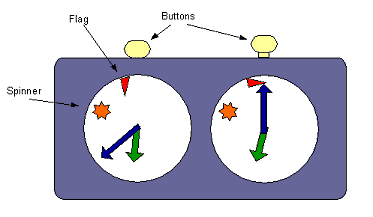 A Mechanical Chess Clock The Chess ClockA chess clock is a pair of timers which are linked so that pressing the button on one clock will stop that clock and simultanously start the other one. The buttons can also be pressed half way down, stopping both clocks. The spinner rotates continuously for which ever clock is turned on. When the minute hand approaches the 12 o'clock position it begins lifting the flag, and when it reaches 12 o'clock exactly, the flag falls. Setting up the ClockRegardless of the time controls to be used, the hour hand starts at 6 o'clock on each clock. The minute hand is set so that time will expire when it reaches 12 o'clock. For example, for a 10 minute speed chess game, the minute hands will be set at 10 o'clock, while for a 90 minute game the minute hands would be set at 6 o'clock, expiring the second time the flag falls. Play begins with both clocks stopped when black starts white's clock. Each time a player moves, he will press his button stopping his clock and starting his opponent's clock. Win, Lose, or Draw by TimeIf a player's time expires, he loses. The exception to this rule is when a player's time expires after his opponent has been reduced to only a king, in which case the game is a draw. Normal Time ControlsTime controls can be set to anything the players agree to, but tournaments will have set time controls and there are a few standards which should serve as a guide. Most time controls require that the game be recorded in order to keep accurate track of how many moves have been played. Also, the controls which add a certain number of seconds per move require digital chess clocks which have a special function for this. At a club level, I recommend simple time controls based on a scholastic rate of 1 move/minute.

Rules | Openings | Midgame | Endgames Biographies | Books | Clubhouse | Links Sponsored by BibleSanity.org |