The Rules of Chess
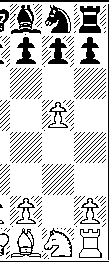
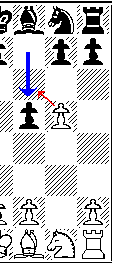
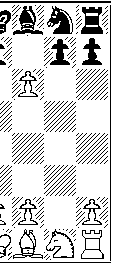
En Passant and Castling:En PassantEn Passant means "in passing". It is a special capturing move for pawns under certain conditions. When a pawn is on its fifth rank, an opposing pawn on its starting square can move 2 spaces to its fourth rank, comming along side of the first pawn. This is the instance which allows for the possibility of an en passant capture. The en passant move is for the pawn which is on its fifth rank to then capture the pawn anyway, moving to the square which would have been occupied had the pawn only moved one square instead of two.
Note that pawns may only capture other pawns in this manner, and only if the pawn has advanced 2 spaces in one move. There is one additional stipulation to capturing en passant, it can only be done on the following move. If the rule is not taken advantage of immediatly, the opportunity passes. Castling
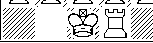
Castling is a special move which the king has using one of his rooks. When castling, the king is moved 2 spaces on the back row, towards the outside of the board and the rook on that side is placed on the inboard side of the king. This is one move. Notice that the resulting position is slightly different depending on whether the king castles kingside (0-0) or queenside (0-0-0). There are three conditions which must be met before a king can castle.
Note that this is a king move, not a rook move. In tournament play (and computer programs), you must move the king first. |


Rules | Openings | Midgame | Endgames
Biographies | Books | Clubhouse | Links
http://www.finitechess.com